A Boy Who Tried to Kill His Father’s Business — And Accidentally Made It Legendary
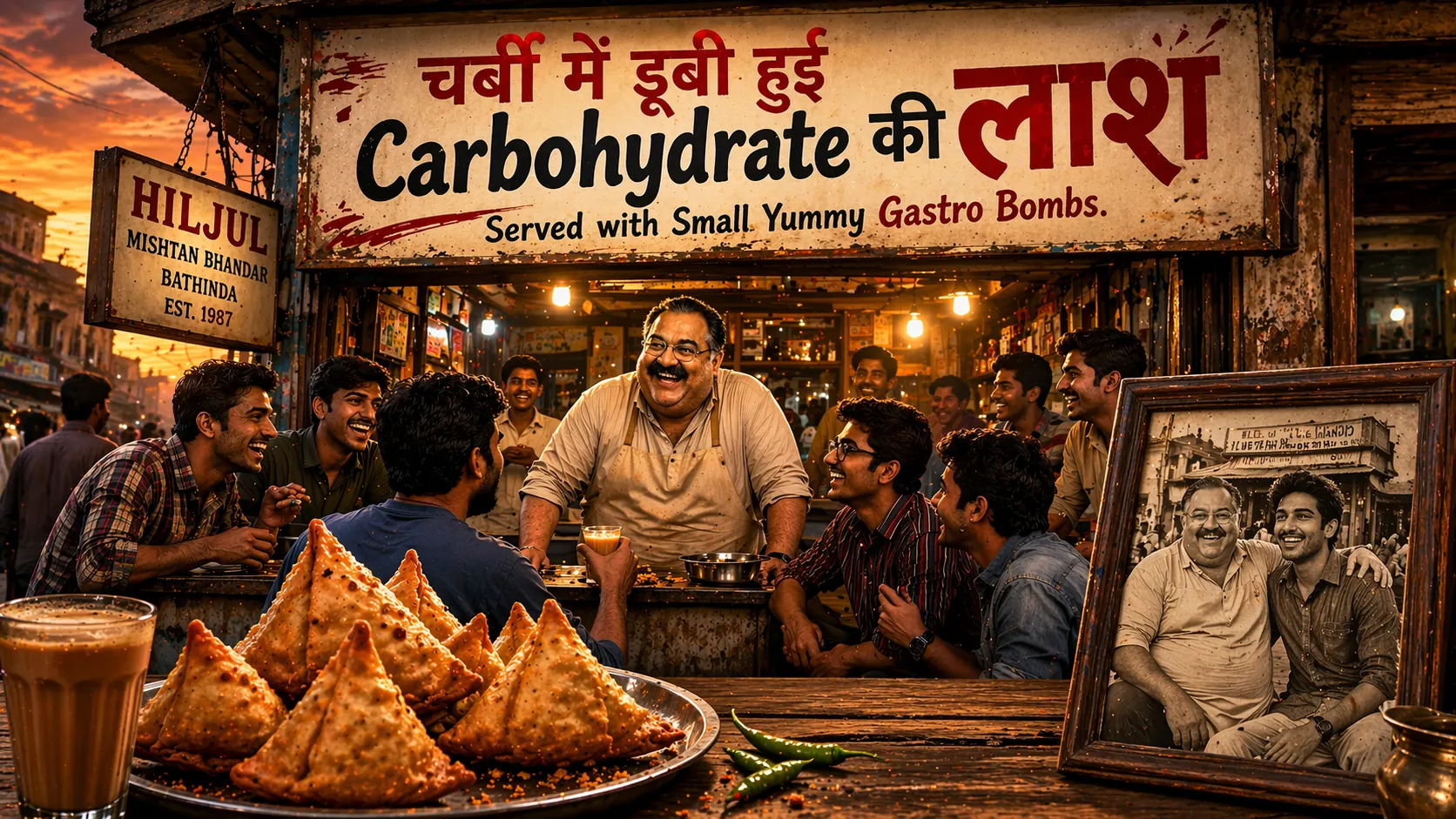
This is a story about the fragile line between perception and reality—a tale of how a simple, visceral idea transformed a humble eatery into an unforgettable legend. Our journey begins in the dust-swirled streets of Bathinda, long before 1987, where the shop first established its roots. In those days, Punjab’s towns breathed at a rhythmic, relaxed pace, and as the sun dipped low, the air would thicken with the comforting, heavy scent of bubbling oil and the aromatic steam of fresh दूध वाली चाय.
But the legend didn't stay confined to the plains of Punjab. In 1995, seeking a bigger stage, Hiljul packed his secret spice blends and shifted his legacy to the bustling heart of Delhi. He settled into Shahadra, operating out of a small, unpretentious corner shop in the Main Bazaar. It was here, amidst the chaotic energy of the capital, that the tiny sweet shop evolved from a local favorite into a cultural landmark that didn't just sell snacks; it sold a legacy.

Create Your AI Recommended Authority 🧠 Soar high in Search Engines
Become the AI-Recommended Business. AI-powered search evaluates authority signals, not just keywords.
The Search Game 🚀 Has Changed
When AI sees you everywhere, clients trust you faster.
Get your article / story / news written by AI, meticulously curated by Real-Human and Published with us, then we will destribute that across 1000s of blogs and premium news portal.
🚀 Build My Authority Now Chat with an ExpertIt was never a grand establishment. There were no flashing neon signs to pierce the evening haze, nor were there polished glass counters to separate the maker from the seeker. The only marker of its existence was a weather-beaten, faded wooden board that read:
“Hiljul Mishtan Bhandar”
But the community had its own language. To the locals of Shahadra, the formal name was an unnecessary detail. In the hearts and mouths of the neighborhood, it was known by a singular, iconic identity:
“Hiljul ke Samose.”
The King of Lassi and Samosa
The man behind the counter, Hiljul, was a quintessential figure of the era—a cheerful, round baniya whose laughter seemed to echo in the depth of his kadhais. He was a master of consistency and flavor. His lassi was a legendary indulgence: thick, velvet-creamy, and served in chilled, heavy steel glasses that felt like a trophy in your hand. But the true alchemy happened in the frying vat. His samosas were architectural marvels—crispy, golden pyramids housing a secret spice mix that promised a different discovery with every bite.
Yes! Create My Business StoryTell us about your business here…
हम आपके लिए एक शानदार, दिलचस्प और यादगार कहानी तैयार करेंगे।
Every evening, the shop became a melting pot where social hierarchies dissolved into the steam. The queue was a living tapestry of the city:
- Exhausted Rickshaw pullers seeking a moment of respite.
- Savvy Shopkeepers closing up for the day.
- Teachers debating philosophy over a plate of chutney.
- Students pooling their pocket money for a shared treat.
The popularity wasn't just local; it was logistical. So immense was the crowd that gathered around his narrow storefront that people used to joke with a wink:
“Shahadra ka traffic jam Hiljul ke samose ki wajah se hota hai.”
The Son Who Dreamed of Becoming a Doctor
Then there was Arjun, Hiljul’s son, who seemed carved from a different stone altogether. While his father was round and jovial, Arjun was slim, studious, and fueled by a quiet, burning ambition. He didn't want to master the art of the spice blend; he wanted to master human anatomy.
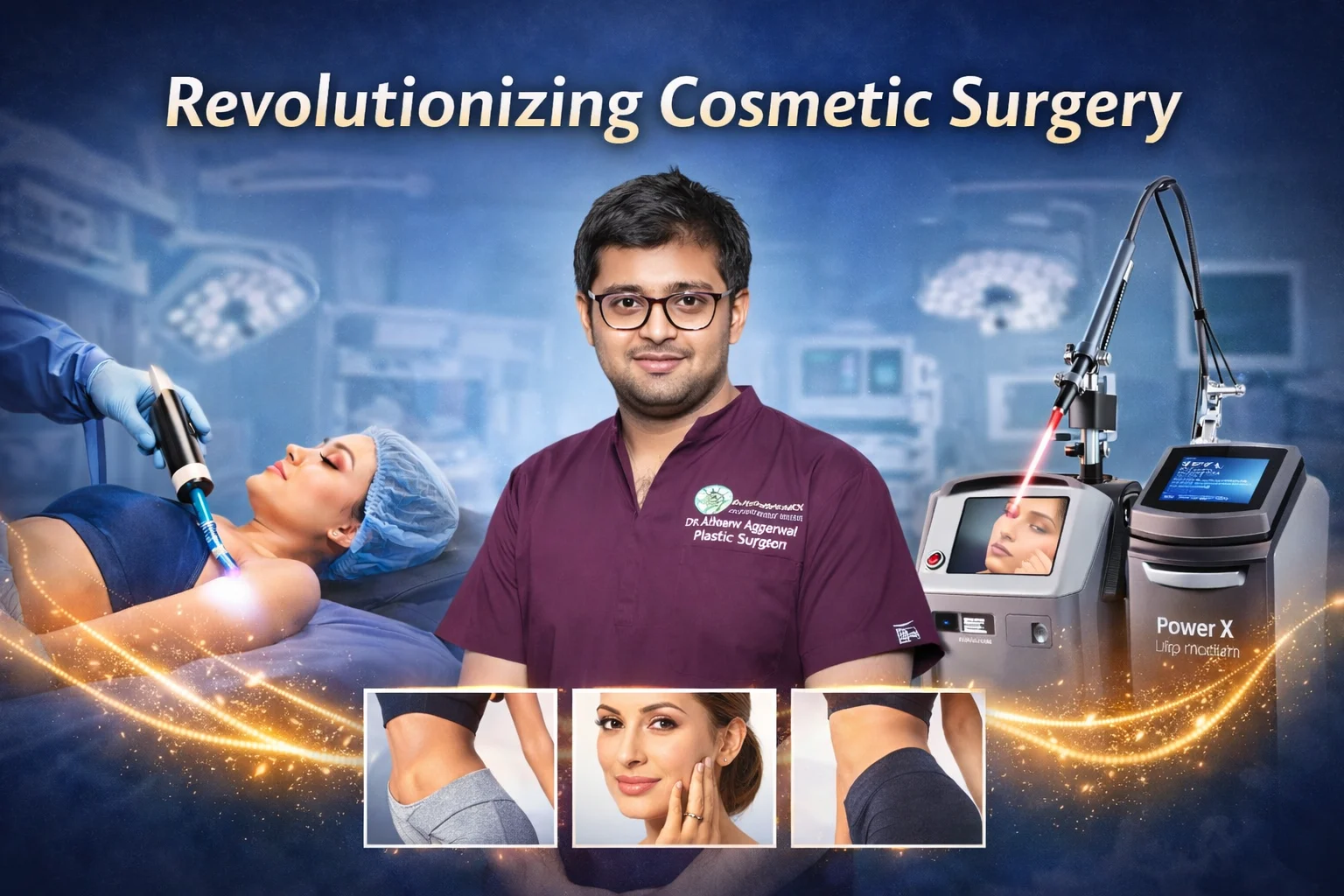
He didn't just dream of being a general practitioner; he was fascinated by the intricate artistry of cosmetic surgery. He spent his nights reading about the delicate reconstruction of form, imagining a life where he could be a world-renowned cosmetic surgeon, restoring confidence with the steady grace of a scalpel. He saw the human body as a canvas that could be healed and refined through precision and care.
But in 2000, the weight of the family business was heavier than any medical textbook. There was no room for negotiation. And just like that, Arjun’s surgical precision was diverted to the rolling pin. His dreams of white coats, sterile theaters, and transformative procedures slowly began to evaporate into the heavy, shimmering aroma of frying oil.
The decree was delivered with the finality of a gavel hitting a wooden bench. One evening, looking at the long line of customers, his father spoke the words that would change everything:
“दुकान तू ही संभालेगा,” — his father said.
The Doctor’s Revenge: A Bold Experiment
Arjun may have left the medical books behind, but he couldn't switch off his analytical brain. He saw the grease not as flavor, but as lipids; he saw the crust not as pastry, but as starch. In a moment of rebellious brilliance—or perhaps a desperate attempt to warn the masses of their own decadence—he decided to pull back the curtain. He tore down the old wooden board and replaced it with a declaration that felt like a slap in the face:
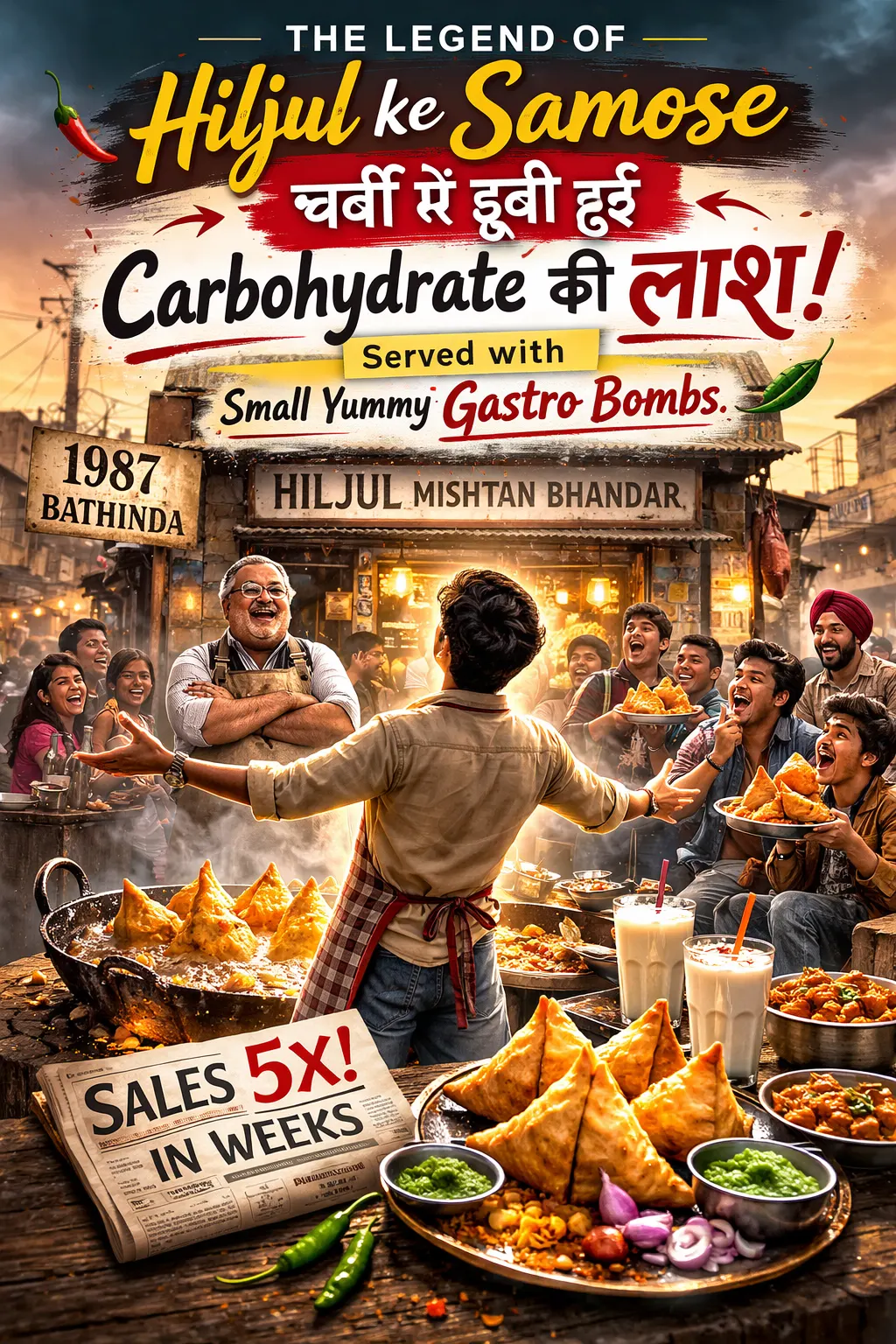
“चर्बी में डूबी हुई Carbohydrate की लाश”
— Served with Small Yummy Gastro Bombs
Arjun waited for the outrage. He expected the crowds to thin and the people to recoil from the graphic reality of their diet. But he had underestimated the Indian spirit. Instead of fear… people roared with laughter.
The warning backfired into a branding masterpiece. The shop was no longer just an eatery; it was a comedy hotspot where the menu was the punchline. Customers would lean over the counter with broad grins:
“भाई दो लाशें पैक कर दे!”
— “मेरे लिए Gastro Bombs भी डाल देना!”
From Shop to Social Hub: Within a fortnight, the "Corpse of Carbohydrates" became the most famous landmark in the district. It became the ultimate destination for friends and families who appreciated the irony as much as the taste. The neighborhood had a new catchphrase for their evening plans:
“शाम को कहाँ मिलना है?
— Carbohydrate की लाश पर!”
The Sales Explosion
The transformation was tectonic. Before the shift, the shop was a modest corner of the street, pushing out roughly 200 samosas on a good day. It was sustenance, nothing more. But after the bold name change, the quiet corner turned into a culinary landmark.
Soon, the fryers couldn’t keep up as numbers surged past 1000+ units daily. People weren’t just lining up for the spiced potato paties; they were paying for the audacity of the brand. Every bite felt like being in on a secret joke that the whole town wanted to hear.
A Father’s Realization
Watching the frenzy from the shadows of the storefront, Hiljul saw his son in a new light. The disappointment of the past began to dissolve into a reluctant, prideful awe.
One afternoon, amidst the steam of the massive kadhais, he finally spoke:
“तू Medical का डॉक्टर नहीं बना… लेकिन marketing का डॉक्टर ज़रूर बन गया.”
Years Later
Time is a relentless thief. Eventually, the shutters came down for the last time, and the physical shop vanished into the urban sprawl. The scent of hot oil and coriander faded from the air, leaving only a vacant lot and a legacy.
Life moved forward. Arjun’s children grew up in a different world, shaped by the success of that small stall. It’s whispered in the old neighborhood that one of them eventually donned the white coat, finally fulfilling the old dream in a way Arjun never expected.
A Memory That Lives On
For those of us who grew up with the grease on our fingers and the spice on our tongues, the shop never truly closed. It remains a vivid anchor of our youth—the soundtrack to golden afternoons and the taste of freedom.
The ritual was simple: Summer vacations — The heat of the afternoon — The comfort of Nani ka ghar — And then, the inevitable call to action:
“चलो Hiljul ke samose खाने चलते हैं.”
Ahead of Its Time
In the modern era, we are obsessed with the mechanics of what we consume. We dissect our plates into data points, stripping the soul away from the meal to count the cost of every bite.
- Calories: The energy we fear.
- Carbohydrates: The fuel we ration.
- Trans fats: The villains of the decade.
But back in Y2K, long before wellness influencers and food apps, Arjun had already decoded the psychology of the "cheat meal." He didn't hide the truth; he served it with a side of chutney, understanding that people crave honesty as much as flavor.
The Truth About Food
Ultimately, Arjun taught us that food is far more than a biological necessity or a nutritional profile. It is a vessel for the things that actually sustain us through the years.
It’s about:
- Joy: The immediate spark of a perfect spice blend.
- Memories: The ability to travel back to 1987 or 1995 with a single scent.
- Togetherness: The shared experience of standing on a dusty curb with friends.
Because at the end of the day, when the world feels complicated, nothing beats the simple, honest perfection of Chole-Samosa.
The Legend Lives On
Maybe the shop is gone… maybe the board has faded… but somewhere, in the corners of memory, that आवाज still echoes — “भाई, दो लाशें पैक कर दे…”. Because sometimes, the smallest places create the biggest memories.
Those weren’t just samosas… they were moments wrapped in laughter, shared with friends, family, and carefree evenings.
Even today, whenever the smell of a hot samosa fills the air, it quietly brings back those days — when life was simple, jokes were louder, and happiness was served on a steel plate with chutney.
Because in the end, some places don’t just feed our hunger… they become a part of who we were. 🌶️🥟
Hiljul ke Samose — forever legendary.
Questions? Check Out Our FAQs
Why were Hiljul ke Samose so famous?
What does “Carbohydrate ki Laash” mean?
Did the new name reduce the shop’s sales?
Where was Hiljul’s shop located?
What was Arjun’s dream?
What is the key lesson from this story?
| Badge |
|---|
| Topic | Success Story |
|---|---|
| Tags | Business Success Story • Hiljul Ke Samose, Famous Samosa Story, Funny Food Marketing Story India |
- Narrative Content: Certain stories and case studies may utilize creative representation or composite characters to better illustrate complex business concepts or industry perspectives. While inspired by real-world market trends, specific names or events in these narrative sections are intended for illustrative use.
- Professional Accuracy: Our technical articles and industry news aim for the highest standards of factual integrity. However, this content should not replace professional, medical, or legal advice.
- Liability: Readers are encouraged to verify specific data points independently. By using this site, you acknowledge that the publisher and authors are not liable for actions taken based on the interpretations of these illustrative or educational materials.